From "Thermochromic Color Change" to "Intelligent Temperature Control": The Performance Revolution and Application Blueprint of Vanadium Dioxide and Tungsten-Doped Vanadium Dioxide
A miraculous material that can "sense" temperature and automatically regulate light — a phase transition temperature control journey from 68°C to room temperature
---
A Window That Can "Think"
Today, when global building energy consumption accounts for approximately one-third of total energy consumption, doors and windows serve as the primary pathway for energy exchange between indoor and outdoor environments, carrying enormous energy-saving potential. In the 1980s, Swedish scientist Granqvist first proposed the concept of "Smart Window," referring to an energy-saving window that can automatically adjust its optical properties in response to external environmental changes. Among numerous smart window materials, vanadium dioxide (VO₂) stands out with its unique thermochromic characteristics, becoming one of the most promising candidate materials.
The magic of vanadium dioxide lies in its ability to undergo an insulator-metal transition (MIT) at a specific temperature, accompanied by dramatic changes in crystal structure and optical properties. Like a "switch" in the material world, it enables intelligent regulation of the solar spectrum. However, the phase transition temperature of pure vanadium dioxide is as high as 68°C, far above room temperature, which limits its practical applications. Through tungsten (W) doping, researchers have successfully reduced this temperature to near room temperature, opening a new era for vanadium dioxide material applications.
---
Vanadium Dioxide: The Physical Essence of Thermochromism
Vanadium dioxide undergoes a reversible metal-insulator transition near 68°C (340 K), a process accompanied by the transformation of crystal structure from the low-temperature monoclinic phase (M-phase, insulating phase) to the high-temperature tetragonal rutile phase (R-phase, metallic phase).
---
Tungsten-Doped Vanadium Dioxide: Precise Control of Phase Transition Temperature
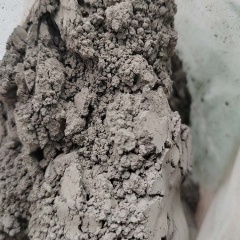
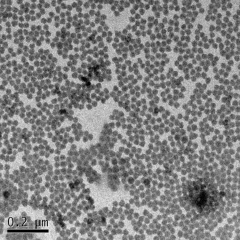
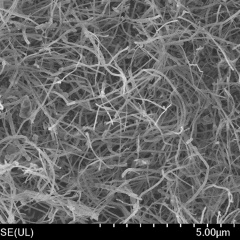
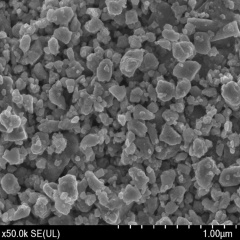
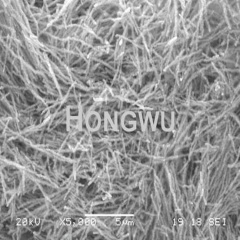
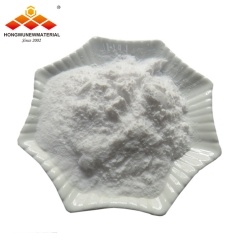
Product Code Description Particle Size Phase Transition Temperature
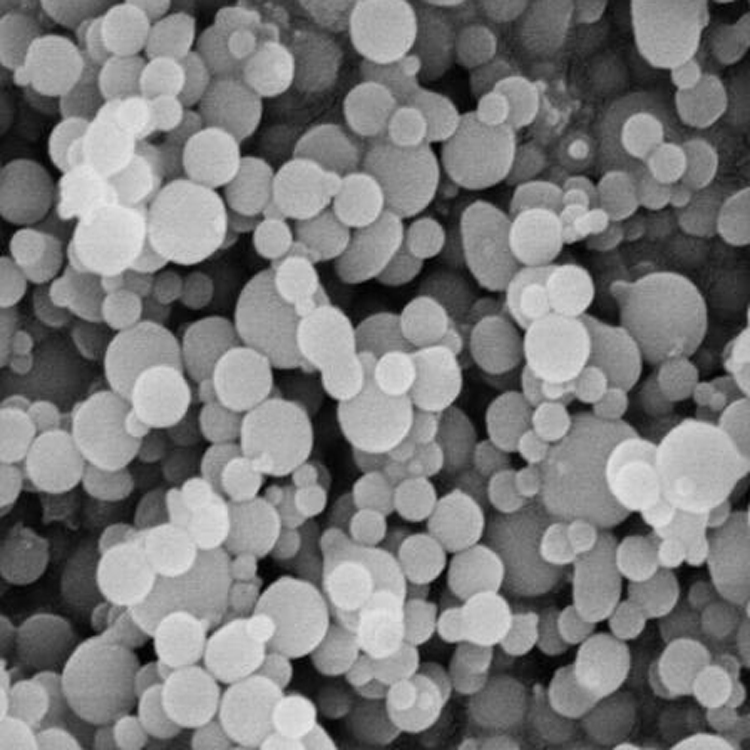
P501, Pure-phase VO₂ 100–200 nm, 67°C ± 3°C
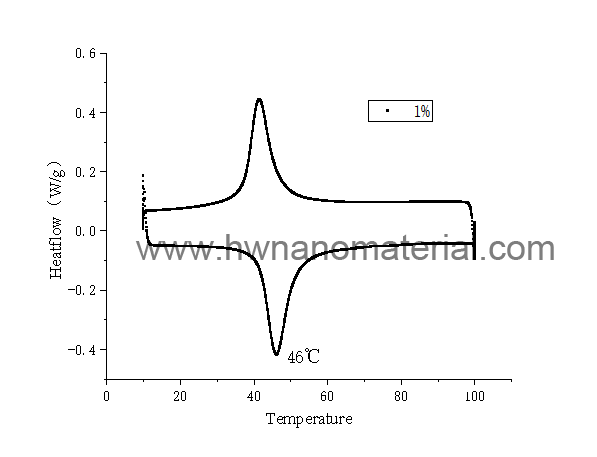
WP501A, 1% W-doped VO₂ 100–200 nm, 45°C ± 3°C
WP501B, 1.5% W-doped VO₂ 100–200 nm, 33°C ± 3°C
WP501C, 2% W-doped VO₂ 100–200 nm, 22°C ± 3°C
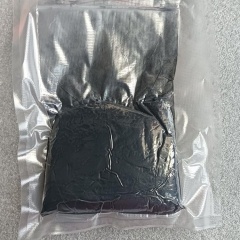
All four products are available in stock.
For more detailed information on VO₂ and W-doped VO₂, please feel free to contact us.

---
Application Fields: From Building Energy Efficiency to Aerospace Thermal Control
1. Smart Energy-Saving Windows (Core Application)
Working Principle:
- Winter/Low Temperature: VO₂ remains in the insulating phase, exhibiting high transmittance to near-infrared light, allowing solar radiation to enter the room and reducing heating energy consumption.
- Summer/High Temperature: VO₂ transforms into the metallic phase, exhibiting high reflectance to near-infrared light, blocking heat from entering and reducing air conditioning load.
Energy-Saving Effects:
- Can absorb >90% of ultraviolet radiation (up to 99% with UV absorber additives)
- Does not affect visible light transmittance, maintaining indoor brightness
- Annual energy-saving potential in temperate climate zones can reach 23%
- Indoor temperature can be reduced by 8.6°C (with photo-actuator structure)
---
2. Temperature Sensors
Utilizing the metal-insulator transition characteristics of tungsten-doped VO₂ near room temperature, high-sensitivity temperature sensors can be fabricated. The resistance change before and after the phase transition reaches 2 orders of magnitude, with fast response speed, suitable for precision temperature control systems.
---
3. Optical Switches and Modulators
---
4. Thermoelectric Devices
After tungsten doping, the electrical conductivity and thermal conductivity of VO₂ become tunable, enabling efficient thermoelectric conversion for energy harvesting and waste heat power generation.
---
5. Aerospace Thermal Control Coatings
The European Space Agency (ESA) has developed thermochromic (TCH) coatings based on tungsten-doped VO₂ for satellite radiators:
- Emissivity contrast: Up to 0.26
- Phase transition temperature: Reduced from 65°C to 33°C
- Environmental adaptability: Passed ultraviolet and thermal cycling tests
---
6. Other Emerging Applications
- Laser Protection Films: Utilizing the abrupt optical property change during phase transition
- Infrared Detectors: Based on resistance change during MIT
- Optical Data Storage: Utilizing the reflectivity difference before and after phase transition
- Catalysts: For nitration reactions, ethane dehydrogenation, etc.
- Ultrafast Optical Devices: Picosecond-response optical switches