banner

金属酸化物ナノ粒子

自宅 より多くのナノ粒子とナノ材料 金属酸化物ナノ粒子

Nano Vanadium Dioxide Materials: A Comprehensive Guide to Monoclinic Particles, W-Doped, and Nanowires

カテゴリ

新製品

  • 透明なSiO₂水性分散液

    モノ分散球状ナノSiO₂水性分散液/コロイド この透明なSiO₂水系分散液は、特許取得済みのソルゲル技術によって合成されており、優れた光学特性(可視光透過率)を有し、常温保存下で18か月以上の保存期間を備えています。電子分野ではlow-k誘電体材料として広く使用され、バイオ医療分野ではドラッグキャリアとして、また光学分野では反射防止コーティングとして利用されています。 more

  • ナノチタン亜酸化物 Ti₄O₇ 粉末

    マグネリ相ナノチタン亜酸化物 Ti₄O₇ 粉末 マグネリ相 ナノ酸化チタンサブオキシド(Ti₄O₇)は、独自の結晶構造を持つ先進的な機能材料であり、青黒色の粉末として現れ、200〜300 nmの精密に制御された粒子サイズと最大99.9%の純度を特徴とする。チタン酸化物ファミリーの重要な一員として、Ti₄O₇は優れた導電性、化学的安定性、触媒活性を兼ね備えており、新エネルギー、環境保護、エレクトロニクス分野の用途に理想的な選択肢となっている。 more

  • 窒化ホウ素ナノチューブ

    窒化ホウ素ナノチューブ(BNNTs):高熱伝導放熱フィラー BNNTsはカーボンナノチューブの管状構造を共有していますが、本質的に異なる特性を提供します:電気絶縁性、優れた熱安定性(空気中で最大900°C)、および高い熱伝導率です。約5.5 eVのワイドバンドギャップを持ち、CNTsが苦手とする領域でも一貫した予測可能な性能を提供します。 more

  • 精密セラミック3Dプリンティングソリューション

    精密セラミック3Dプリンティングソリューションは不可能な構造を現実にする 精密セラミック3Dプリンティングソリューション – セラミック製造の限界を再定義し、歯科修復から航空宇宙グレードの高温部品まで。精密セラミック3Dプリンティングは、不可能な構造を現実に変える。 more

  • ニッケル ナノワイヤー NINWS

    新しい導電性材料ニッケルナノワイヤ NINWS 香州 ニッケル ナノワイヤー 電子材料、触媒作用、ポリマー、磁気貯蔵に幅広い潜在的な用途があります。超高密度記録材料、センサーおよび 自己潤滑 材料 more

  • 抗菌ナノ銀コロイド

    透明コロイドag抗菌ナノ銀コロイド ag( 抗菌ナノ銀コロイド )されていますw 既知の抗菌、抗ウイルス、抗真菌特性は、小さな粒子サイズと大きな表面積によって強化されます。 more

  • エポキシ樹脂に使用されるナノシリカ粒子、超疎水性コーティングナノシリカ粉末

    エポキシ樹脂に使用されるナノシリカ粒子、超疎水性コーティングナノシリカ粉末 ナノシリカ粒子、20-30nm、99.8%純度、露光樹脂および超疎水性コーティングに広く使用されている。 more

最新ニュース

サーモクロミック用途向けのいくつかのナノマテリアル
    サーモクロミック用途向けのいくつかのナノマテリアル

サーモクロミズムとは、温度変化によって材料の色が変化する現象を指します。この変化は通常、材料の電子構造または分子構造の変化によって引き起こされます。その適用原理には主に次の側面が含まれます。 1. サーモクロミック材料の分子は、加熱されると構造的または電子的エネルギーレベルの変化を受け、その結果、特定の波長の光の吸収または反射が変化します。この変化は、分子間の相互作用を変更したり、配向や立体構造を変更したりすることなどによって実現できます。 2. サーモクロミック材料の色の変化は、化学反応の変化...

Nano Vanadium Dioxide Materials: A Comprehensive Guide to Monoclinic Particles, W-Doped, and Nanowires

  • June 26,2026.
Vanadium dioxide (VO₂) has emerged as one of the most promising thermochromic materials for next-generation energy-efficient technologies. When engineered at the nanoscale, VO₂ unlocks extraordinary properties that bulk materials simply cannot match. This guide examines three critical nano-VO₂ materialspure phase Monoclinic VO2 nanoparticles, tungsten-doped VO2 nanoparticles, and VO2 nanowires—providing researchers and engineers with actionable insights for material selection and application development.

---


Understanding the Foundation: Why Nano-VO₂ Matters

At approximately 68°C, bulk VO₂ undergoes a reversible first-order metal-insulator transition (MIT), accompanied by dramatic changes in optical and electrical properties. This phase transition, driven by the Mott-Hubbard mechanism, transforms VO₂ from a monoclinic semiconductor to a rutile metallic state. However, bulk VO₂ suffers from high transition temperatures, poor visible transmittance, and limited solar modulation efficiency.

Nanostructuring addresses these limitations through three primary mechanisms: quantum confinement effects that shift optical absorption, increased surface-area-to-volume ratios that enhance reaction kinetics, and dopant incorporation flexibility that enables precise phase-transition engineering. These advantages make nano-VO₂ indispensable for smart windows, thermal sensors, energy storage systems, and neuromorphic computing devices.

---

Nano VO₂ Particles: Versatile Building Blocks

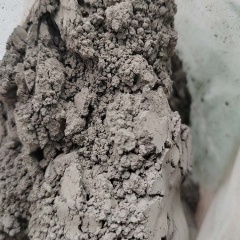
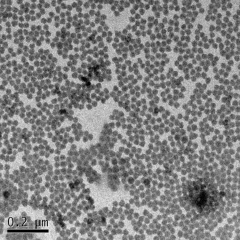
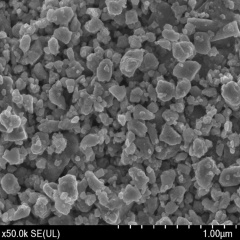
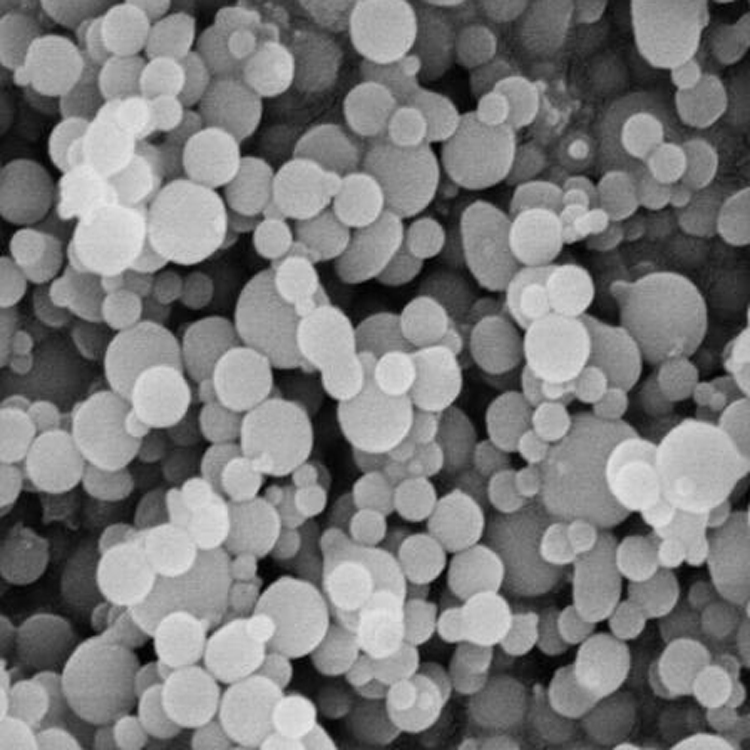
Nano VO₂ particles (typically 100–200 nm) represent the most commercially accessible form of nanostructured vanadium dioxide. Their quasi-spherical morphology enables homogeneous dispersion in polymer matrices, paints, and coatings.

Key Performance Parameters:
- Phase transition temperature: 67°C ± 3°C

The principal limitation of undoped nano-VO₂ particles lies in their high transition temperature, which restricts practical deployment in ambient-temperature applications such as architectural glazing.

---

W-Doped Nano VO₂: Engineering the Phase Transition

Tungsten doping represents the most effective strategy for depressing VO₂'s phase transition temperature toward room-temperature operation. Each atomic percent of tungsten incorporation typically reduces the transition temperature by approximately 20–26°C, enabling precise calibration for target applications.

Critical Doping Considerations:

Tungsten Content (at%)
Transition Temperature (°C)
Primary Application
0% 67°C ± 3°C
High-temperature sensors
1% 45°C ± 3°C
Industrial thermal switches
1.5% 33°C ± 3°C
Automotive smart glazing
2% 22°C ± 3°C
Building energy-efficient windows

W-doped nano-VO₂ maintains the monoclinic-rutile structural transition while introducing localized electronic states that facilitate carrier nucleation at lower thermal energies. However, excessive tungsten content (>3 at%) degrades solar modulation efficiency and reduces crystallinity, establishing a practical doping ceiling for most optical applications.


For smart window applications, W-doped nano-VO₂ particles embedded in polyethylene terephthalate (PET) or polyvinyl butyral (PVB) interlayers demonstrate solar modulation exceeding 15% while maintaining visible transmittance above 45%—meeting the performance thresholds for commercial building integration.

---

VO₂ Nanowires: One-Dimensional Functional Architectures

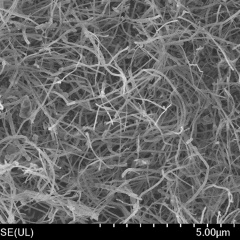
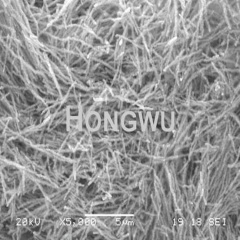
VO₂ nanowires exhibit unique anisotropic properties stemming from their high aspect ratios (length: 10um; diameter:100 nm). These one-dimensional structures demonstrate orientation-dependent optical switching, enhanced electron transport along the wire axis, and superior mechanical flexibility compared to particulate counterparts.

Distinctive Characteristics:
- Anisotropic phase transition: Nanowires often exhibit broadened transition regions due to surface-stabilized metastable phases
- Enhanced local field effects: Subwavelength diameters enable plasmonic interactions in the metallic phase
- Direct device integration: Individual nanowires serve as active elements in field-effect transistors, memristors, and single-nanowire sensors

Recent research published in Advanced Functional Materials (2025) demonstrated that VO₂ nanowire arrays grown on flexible substrates achieve reversible resistance switching ratios exceeding 10⁴, positioning them as promising candidates for non-volatile memory and artificial synapse applications in neuromorphic computing architectures.

---

Comparative Selection Guide

Property
monoclinic VO2 W Doped VO2 Nanowires
Transition Temp
68°C
Tunable (10–50°C)
50–65°C (size-dependent)
Solar Modulation
Moderate
High
Variable (anisotropic)
Dispersibility
Excellent
Excellent
Challenging
Scalability
High
Moderate
Moderate
Best Application
Coatings, Composites
Smart windows
Sensors,Eelectronics
Cost Level
$ $$ $$$


---

Frequently Asked Questions

Q: Can W-doped nano-VO₂ achieve room-temperature switching without sacrificing optical performance?
A: At 2.0 at% tungsten doping, transition temperatures approach 20°C with acceptable solar modulation (ΔTsol 12–14%). However, visible transmittance decreases, necessitating anti-reflection coatings or optimized particle distributions for commercial window applications.


Q: Are VO₂ nanowires commercially available?
A: Currently, VO₂ nanowires remain primarily a research material supplied by specialized nanomaterial vendors in gram quantities. Industrial-scale production remains limited by growth throughput and substrate costs.

---

The nano-VO₂ landscape is evolving rapidly. For organizations evaluating nano-VO₂ adoption, W-doped nanoparticles offer the most immediate commercial pathway for energy-efficient glazing, while nanowires present high-value opportunities in next-generation electronics. Understanding the distinct advantages and limitations of each morphology enables informed material selection aligned with specific performance requirements and manufacturing constraints.


著作権 © 2010-2026 Hongwu International Group Ltd 全著作権所有.

サービスする専門チーム!

今すぐチャット

ライブチャット

    ご不明な点がございましたら、お気軽にお問い合わせください。あなたの質問にお答えできたら幸いです。