Microwave absorbing materials refer to a class of functional materials capable of absorbing or significantly attenuating the electromagnetic wave energy received on their surfaces, thereby reducing electromagnetic interference. In engineering applications, an ideal microwave absorbing material is expected not only to exhibit high electromagnetic wave absorption capability over a broad frequency band, but also to possess properties such as lightweight, temperature resistance, moisture resistance, corrosion resistance, and ease of processing.
The four commonly used types of nanomaterials for microwave absorbing applications are as follows:
1. Carbon-based Nanomaterials
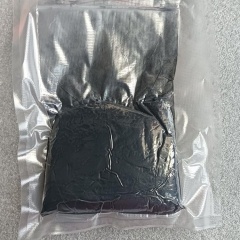
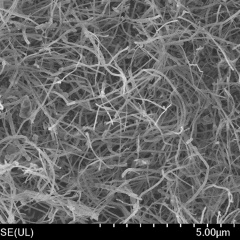
This category mainly includes nano-graphene, carbon nanotubes (CNTs), carbon nanofibers, and porous carbon.
Carbon nanotubes are characterized by their lightweight nature, large specific surface area, excellent electrical conductivity, and strong chemical stability. They can effectively absorb electromagnetic waves through dielectric loss and multiple scattering mechanisms. With a broad absorption bandwidth and good compatibility for composite fabrication, carbon nanotubes represent one of the most promising directions in next-generation microwave absorbing materials.
2. Iron/Nickel/Cobalt-based Nanomaterials
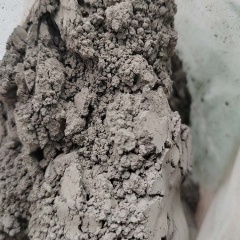
This category mainly includes nano iron powder, nano nickel powder, nano cobalt powder, and their alloy powders.
These materials primarily absorb electromagnetic waves through magnetic loss mechanisms. Compared with single-phase metallic nanopowders, Fe-, Co-, and Ni-based nano-alloys or multiphase composite powders generally exhibit superior microwave absorbing performance. However, due to issues such as easy oxidation and relatively high density of pure metallic nanomaterials, surface coating, alloying, or composite strategies with other materials are commonly employed in practical applications to address these limitations.
3. Ferrite Nanomaterials
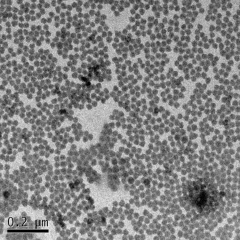
This category mainly includes nano-Fe₃O₄, nickel-zinc ferrite (NiZn), manganese-zinc ferrite (MnZn), barium ferrite, strontium ferrite, and cobalt ferrite.
Ferrites possess both magnetic loss and dielectric loss characteristics, and their high electrical resistivity effectively suppresses eddy current loss, enabling them to maintain good microwave absorbing performance even at high frequencies. Spinel-type ferrites are suitable for medium-to-high frequency bands, while hexagonal ferrites, with their higher magnetocrystalline anisotropy fields, are applicable to even higher frequency ranges. Ferrite nanomaterials are cost-effective, chemically stable, and feature a broad absorption bandwidth, making them one of the most widely used microwave absorbing fillers at present.
4. Ceramic Nanomaterials
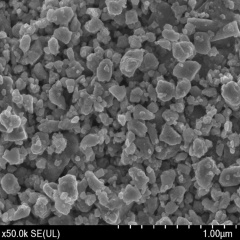
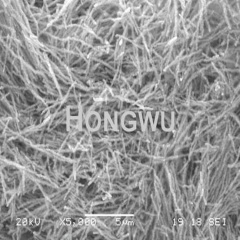
This category mainly includes silicon carbide (SiC) whiskers, nano-SiC particles, and nano-silicon nitride (Si₃N₄).
Silicon carbide not only exhibits certain microwave absorbing properties, but also offers advantages such as high-temperature resistance, low density, good toughness, high strength, and high resistivity, giving it promising application prospects in electromagnetic compatibility and stealth fields. Due to size effects and enhanced interfacial polarization, nano-SiC features a broader absorption bandwidth and demonstrates favorable absorption performance in both the millimeter-wave and centimeter-wave bands.
Application Fields
With the increasingly complex electromagnetic environment, the application value of nano microwave absorbing materials has become increasingly prominent, mainly in the following areas:
Electromagnetic Protection: Used for electronic device shielding and electromagnetic environment management in server rooms and data centers, effectively reducing the impact of electromagnetic radiation on personnel and equipment.
Telecommunications: Applied in electromagnetic compatibility design for 5G base stations, radomes, and communication equipment, ensuring signal transmission quality.
Consumer Electronics: Used for electromagnetic interference suppression in mobile phones, laptops, smart wearable devices, and other products, enhancing their electromagnetic compatibility performance.
Automotive Industry: Applied in electromagnetic shielding for electronic control systems and vehicle-mounted electronics in new energy vehicles, ensuring driving safety and system stability.
Smart Buildings: Used as electromagnetic shielding coatings or functional coatings for electromagnetic environment protection in specialized facilities.
Healthcare: Applied in electromagnetic protection for medical equipment, preventing electromagnetic interference from affecting precision instruments.
Nano microwave absorbing materials offer advantages such as lightweight, broad absorption bandwidth, and tunable performance. Compared with conventional materials, nanomaterials generally exhibit superior microwave absorbing performance due to size effects, interfacial effects, and structural designability.
With the rapid development of industries such as 5G communications, new energy vehicles, and smart electronics, nano microwave absorbing materials are expected to play an increasingly important role in electromagnetic protection and electromagnetic environment management.


 日本語
日本語 English
 français
 Deutsch
 русский
 italiano
 español
 português
 한국의
한국의 Türkçe





 8620-87226359,8620-87748917

